When homeowners first start thinking seriously about the air inside their homes, they almost always arrive at the same question: isn’t a good filter enough? It is a fair thing to ask. Filters are everywhere, they are inexpensive, and we have been told for decades that a fresh one is the key to a healthy home. The honest answer is that filters do genuinely important work, but they were never designed to handle everything floating through your air. Understanding the real difference in the bi-polar ionization vs air filters debate is what separates simply managing your air quality from actually improving it.
What a Traditional Air Filter Actually Does
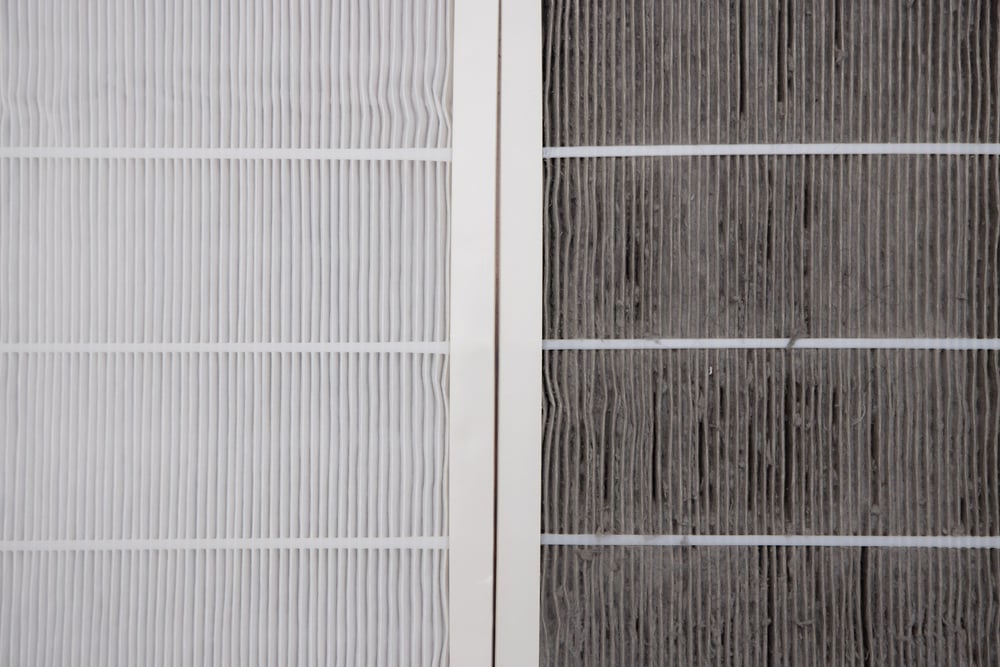
A standard HVAC filter is a passive barrier, and that word passive is the key to understanding its limits. Air has to physically pass through the filter for it to catch anything, and it can only trap particles large enough to get snagged in its mesh. Step up to a higher-MERV or true HEPA filter and you will capture more, including finer particles, but that denser material also restricts airflow. That restriction can force your system to work harder, drive up your energy costs, and in some cases strain equipment that was never built for it. Even a premium filter, working exactly as intended, only ever cleans the slice of air that travels through the return duct.
Where Filtration Falls Short
The gaps become obvious once you think about how air actually behaves in a home. Particles settle on countertops, doorknobs, and upholstery, and a filter does nothing for those surfaces. Many viruses and ultrafine particles are small enough to slip through standard filtration entirely. And filters do not address odors or the volatile organic compounds released by cleaners, paints, and furnishings, because those are gases rather than particles to be trapped. A filter is really a checkpoint that some of your air passes through some of the time, which leaves a great deal of room for the very things you most want gone.
How Bi-Polar Ionization Works
Bi-polar ionization takes the opposite approach, because it is active. Rather than waiting for particles to arrive, the system releases positive and negative ions directly into your air through the HVAC system, using a non-thermal cold plasma process. Those ions seek out airborne particles and bind to them, clumping allergens together until they are heavy enough to drop out of the air you breathe. At the same time, the ions break down the surface proteins of viruses and bacteria and neutralize the compounds responsible for odors and VOCs. It is essentially a scaled-down version of what happens in nature, where the ions found near mountains and coastlines keep outdoor air feeling clean and fresh.
Active vs. Passive: The Core Difference
If a filter is a net stretched across a single doorway, ionization is more like treating the entire room at once, continuously. The system does not depend on air finding its way to one point of capture. It works throughout the home, on both the air and the surfaces, around the clock and without any effort on your part. That continuous, whole-home coverage is the fundamental advantage, and it is exactly why active treatment reaches problems that filtration simply cannot. You can see a fuller breakdown of how the technology works on our Health Benefits page.
Is Bi-Polar Ionization Safe?
Safety is usually the next question, and it is an important one. The AtmosAir process is non-thermal, which means it produces no heat, no light, and no ozone or other harmful byproducts. It is not introducing chemicals into your home; it is restoring the same naturally occurring ions you would encounter on a walk near the ocean or in the mountains. For families with young children, older relatives, or anyone with respiratory sensitivities, that chemical-free approach is a large part of the appeal, and it is one of the first things we walk homeowners through.
Do You Have to Choose?
Here is the part that surprises people: this is not an either-or decision. You will still want a filter to capture the larger particles it handles well, and ionization takes care of everything the filter misses. The two work together rather than competing. The AtmosAir Matterhorn system installs directly into your existing HVAC, runs silently in the background, and asks almost nothing of you in return, needing only a simple periodic inspection and an occasional tube replacement.
The Bottom Line for Charleston Homes
Filters remain a sensible first line of defense, but in a climate like ours, where humidity, pollen, and coastal air keep the indoor environment under constant pressure, they were never meant to carry the full load on their own. Pairing dependable filtration with active bi-polar ionization gives your home the kind of continuous, comprehensive treatment that actually moves the needle. If you would like to know whether ionization is a good fit for your home, request a free assessment and we will walk you through the options.