Most people in Charleston do not go looking for an indoor air quality problem. They notice a symptom first. Someone in the house wakes up congested every morning and clears up an hour after leaving for work. A closet smells faintly of a crawlspace. Dust returns to the coffee table two days after it was wiped down. The instinct is to guess at a cause and buy something, but guessing is expensive, and the far better first move is to actually find out what is in your air. The good news is that testing your indoor air is more accessible than it used to be, and you can learn a surprising amount before spending anything at all.
Start by Reading Your House
Before any device gets involved, spend a week paying deliberate attention. Indoor air problems almost always leave a pattern, and the pattern is the most valuable diagnostic information you will get. Note which rooms feel stuffy and which feel fine. Note whether symptoms are worse in the morning after eight hours of sleeping in a closed bedroom, which points toward something in that room or the ductwork feeding it. Note whether the musty smell is strongest on humid days, after rain, or when the air conditioner has been running hard.
Walk the house looking for water, because water is upstream of most air quality complaints in the Lowcountry. Check under every sink, around the base of toilets, along window sills, at the ceiling below any upstairs bathroom, and in the crawlspace if your home has one. Look at your air conditioner’s condensate drain line and the pan beneath the air handler. If you find standing water or a damp surface anywhere, you have likely found the source of your problem without a single measurement.
Humidity Is the Measurement That Matters Most Here
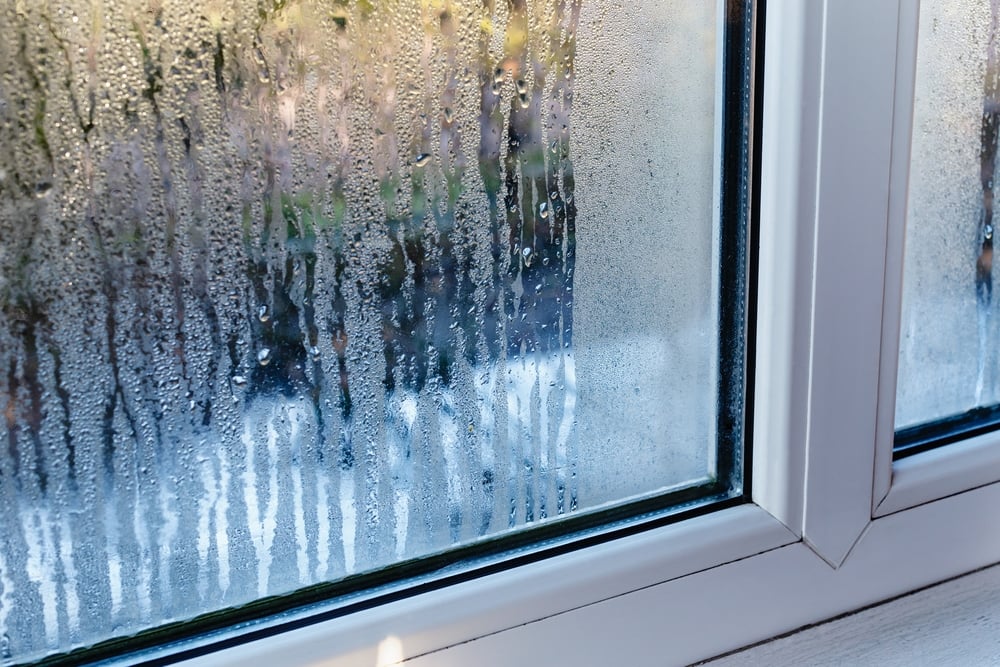
If you buy only one instrument, buy a hygrometer. They cost very little, and in a Charleston home, relative humidity explains more about indoor air than any other single number. You want indoor humidity sitting between forty and fifty percent. Below thirty and the air becomes uncomfortably dry, which is rarely our problem here. Above sixty and you have created conditions where mold establishes itself, dust mites multiply happily, and odors intensify. This connection between moisture and everything else is something we have explored in more depth in our piece on how Charleston humidity affects indoor air quality.
Place a hygrometer in two or three locations rather than one, because houses are not uniform. A master bedroom on the second floor and a downstairs guest room can differ by ten points or more. Read them at different times of day. If one room consistently runs high, you have narrowed your search dramatically.
What a Consumer Air Quality Monitor Will and Will Not Tell You
Consumer monitors have improved considerably, and a decent one will track particulate matter, total volatile organic compounds, carbon dioxide, temperature, and humidity in real time. Used well, they are genuinely informative. Particulate readings show you how much dust, pollen, and other fine material is suspended in your air, and watching that number rise when the HVAC kicks on tells you something important about your ductwork and filtration. Carbon dioxide is a proxy for ventilation, and a bedroom that climbs above a thousand parts per million overnight is a bedroom that is not exchanging enough fresh air.
Where these devices fall short is specificity. A monitor will tell you that volatile organic compounds are elevated. It will not tell you whether that is new furniture off-gassing, cleaning products, or the microbial compounds produced by mold. It will tell you particulates are high without distinguishing pollen from pet dander from cooking smoke. Treat the readings as a map of where and when, not as an identification of what.
When to Bring in Professional Testing
Professional testing is worth the money in a few specific situations. If someone in the household has persistent respiratory symptoms that a doctor suspects are environmental, laboratory analysis gives you something concrete to work with. If you have had water intrusion from a storm, a burst line, or a roof leak, and you want to know whether remediation was complete, air and surface sampling answers that. If you are buying a home and something smells wrong during the walkthrough, testing before closing is far cheaper than discovering the problem afterward.
A proper assessment usually involves sampling indoor air and comparing it against an outdoor control sample, because context matters. A spore count means nothing in isolation. It means a great deal when the indoor number is several times the outdoor number, which indicates an indoor source rather than what simply blew in through the front door.
Turning Results Into Decisions
Testing only pays off if it changes what you do. High humidity points toward dehumidification, ventilation corrections, and finding the moisture source. Elevated particulates point toward filtration quality and duct condition. Elevated carbon dioxide points toward ventilation and fresh air exchange. Persistent musty odors with normal particulate readings often point toward microbial activity somewhere out of sight, which is a case for looking harder rather than filtering more.
Most Charleston homes end up needing some combination of moisture control and continuous air treatment rather than one silver bullet. That is simply what this climate demands. If you want more background on why the Lowcountry is a genuinely harder environment than most of the country, our page on why air quality matters here lays out the reasoning, and our frequently asked questions covers the practical points homeowners raise most often.
The Value of Knowing Rather Than Guessing
There is a version of this where a homeowner spends several hundred dollars on portable units, changes filters more often, runs a dehumidifier constantly, and still cannot shake the feeling that something is off. Almost always, that happens because nobody ever established what the actual problem was. An afternoon with a hygrometer and a careful walk through the house can save months of that.
If you would rather not sort through it alone, we are glad to help. When we evaluate a home, we look at your system, your humidity behavior, your ductwork, and the way your particular house handles Lowcountry conditions before recommending anything. You can request a quote and assessment whenever you are ready.